
Key Takeaways
-
Installed in 5 business days after delivery, demonstrating rapid constructability.
-
Provided 58,190 ft³ of total detention storage within a constrained site.
-
AquaCell SC-3 modularity allowed efficient installation and precise volume configuration.
-
PT-ROW™ pretreatment layer supported sediment control and long-term system
performance.
The Problem
The Marietta Crossing redevelopment required a high-capacity underground stormwater detention
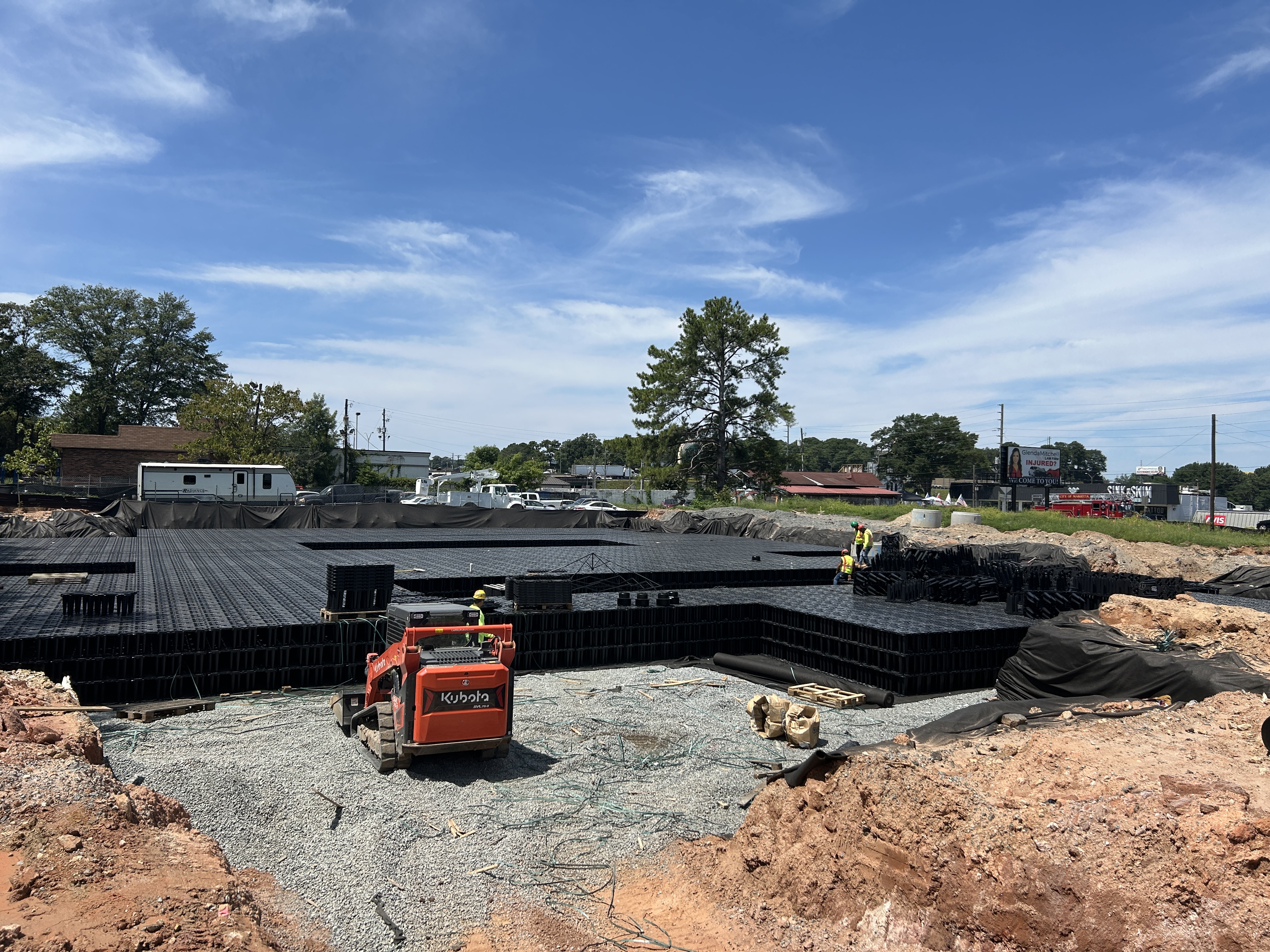
system capable of providing over 58,000 ft³ of storage while fitting within a constrained site footprint. Final grading, building layout, and existing utility alignments left limited horizontal space, making a traditional pond or oversized pipe system impractical. The system also needed to accommodate multiple inlet and outlet elevations, support traffic loads, and meet coverage depth requirements. Rapid installation was a priority to maintaining the project schedule for the August 2025 construction window.
The Solution
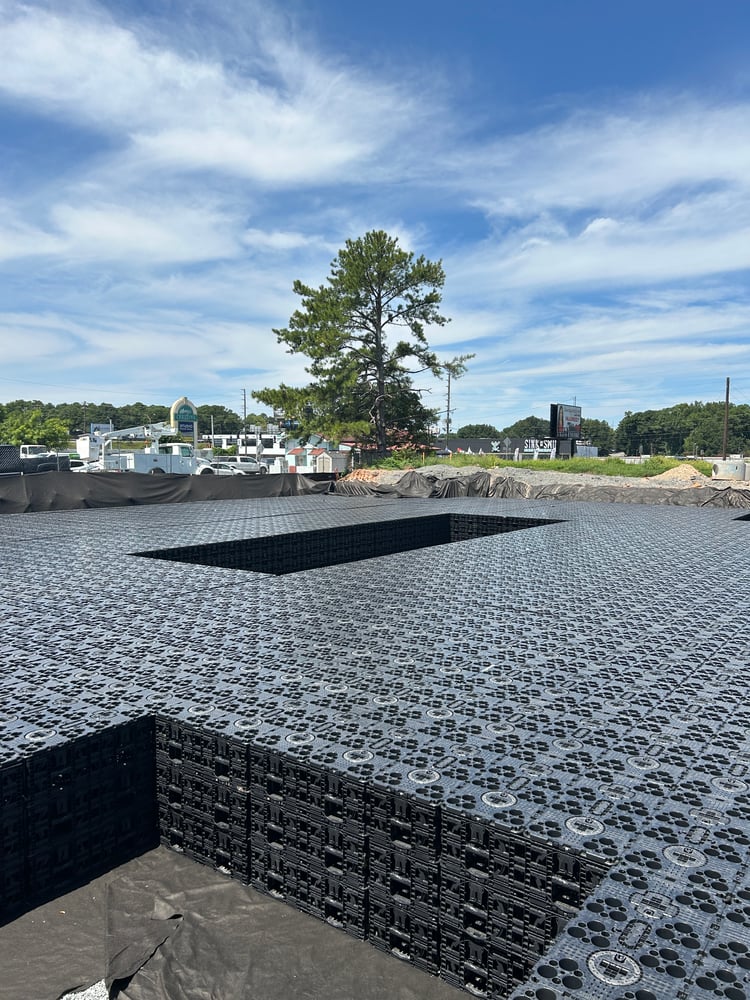
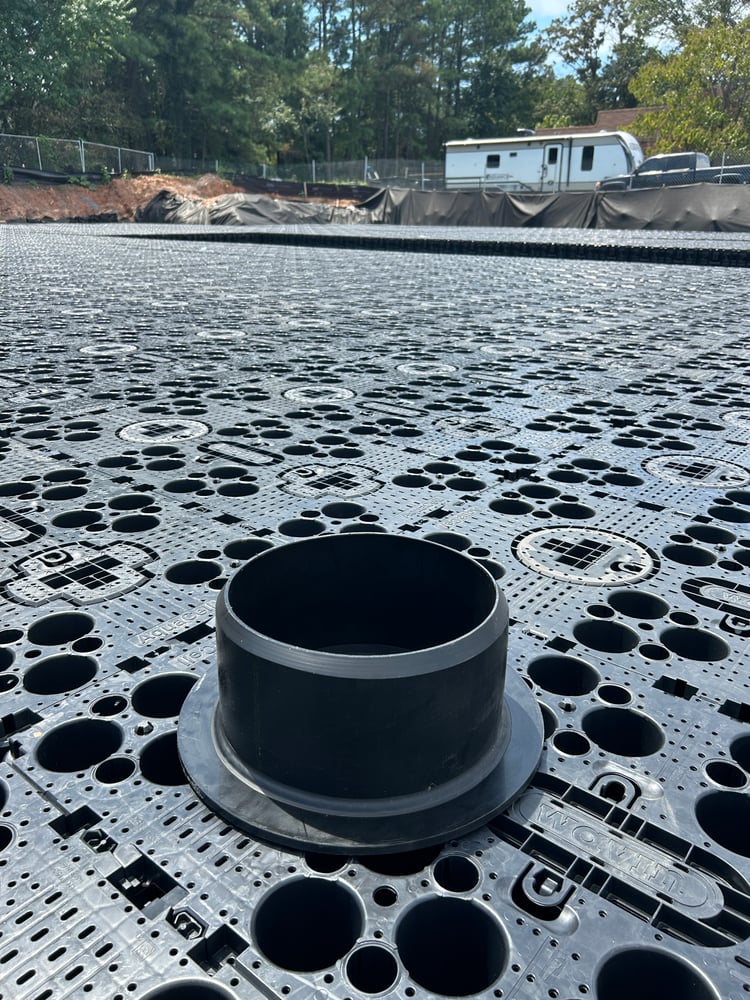
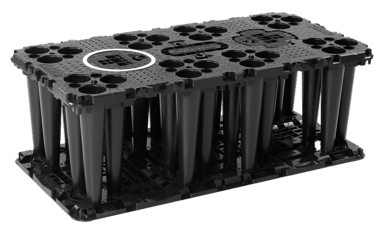
Wavin AquaCell SC-3 modules were selected as the optimal detention solution due to their high strength structure, 95% void ratio, and modularity. The final system footprint was 14,438 ft² with a total storage volume of 58,190 ft³, including 55,126 ft³ provided by the AquaCell tank and 3,063 ft³ from the surrounding stone envelope. Multiple PT-ROW™ pretreatment layers wrapped in woven geotextile were incorporated to address sedimentation concerns and improve long-term performance. The installation included a 12-inch stone perimeter, 4-inch stone base, nonwoven geotextile wrapping, and multiple inlet and outlet pipe connections at 18-inch and 30-inch diameters. Cover requirements met H-10, HS-20, and HS-25 loading conditions.
The Impact
The AquaCell system enabled the contractor SRG Stormwater, in collaboration with Brent Scarbrough & Co., to complete the installation in four business days, minimizing site disruption and avoiding delays to vertical construction on the Marietta Crossing development. The compact footprint allowed the project team to maintain planned building and parking layouts without expanding the disturbance boundary. The high storage efficiency provided the required 58,190 ft³ without increasing excavation depth. The modular system also simplified logistics, reduced equipment needs, and improved worker safety.


.png?width=380&height=250&name=wavin-us-pprct%201%20(1).png)

